Concrete Leveling & Polyjacking
Concrete Leveling & Polyjacking in Charlotte, NC
Concrete leveling in Charlotte, NC starts under the slab, where the soil survey shows some creek-bottom soils flood often.
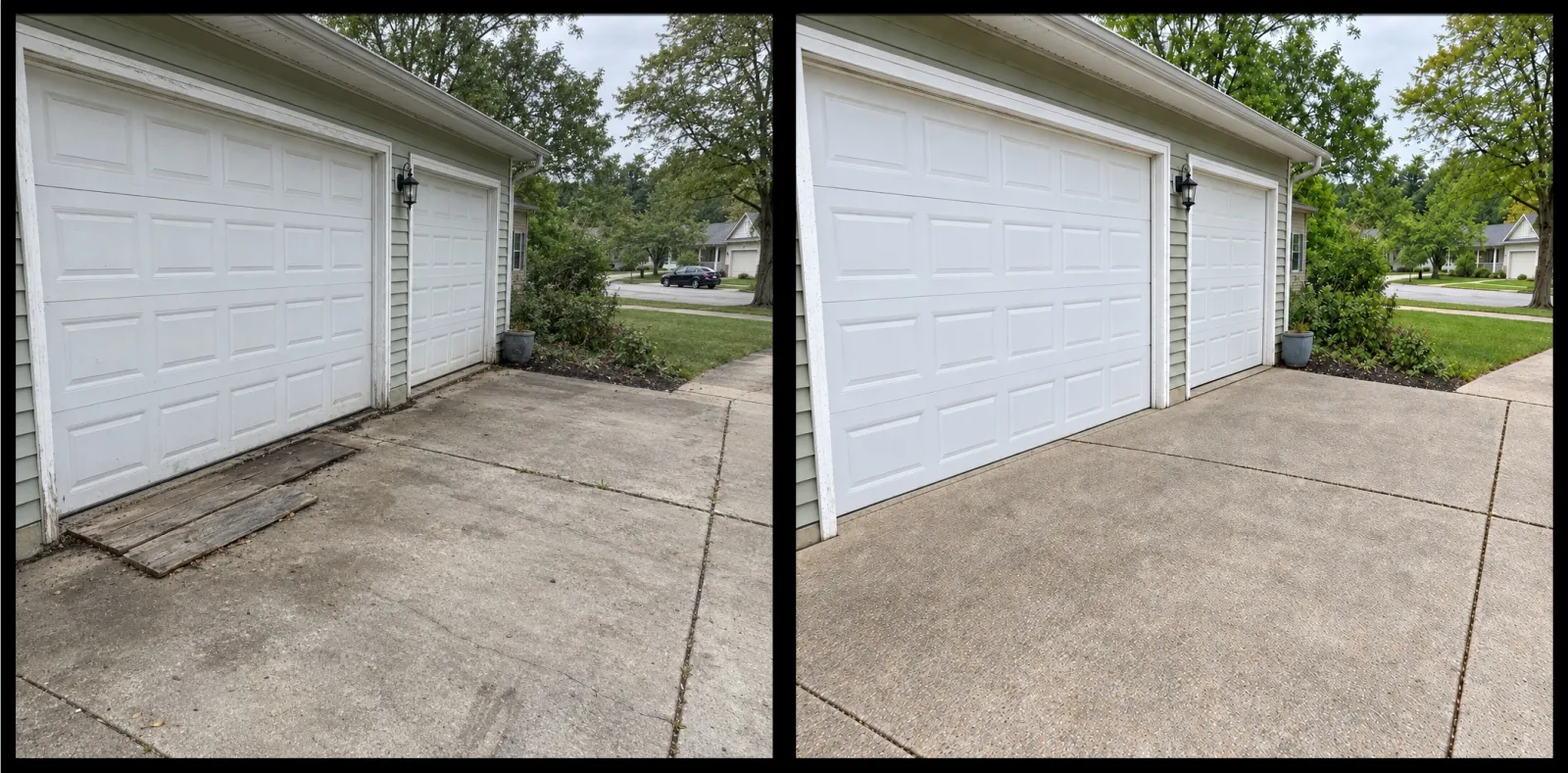
Sunken Driveways, Walks and Patios: What You May See
Look for these signs of a sunken slab. Each one can have more than one cause, and only an inspection confirms which applies.
- A driveway or walk section that sits lower than its neighbor. The ground under it may have settled or washed out.
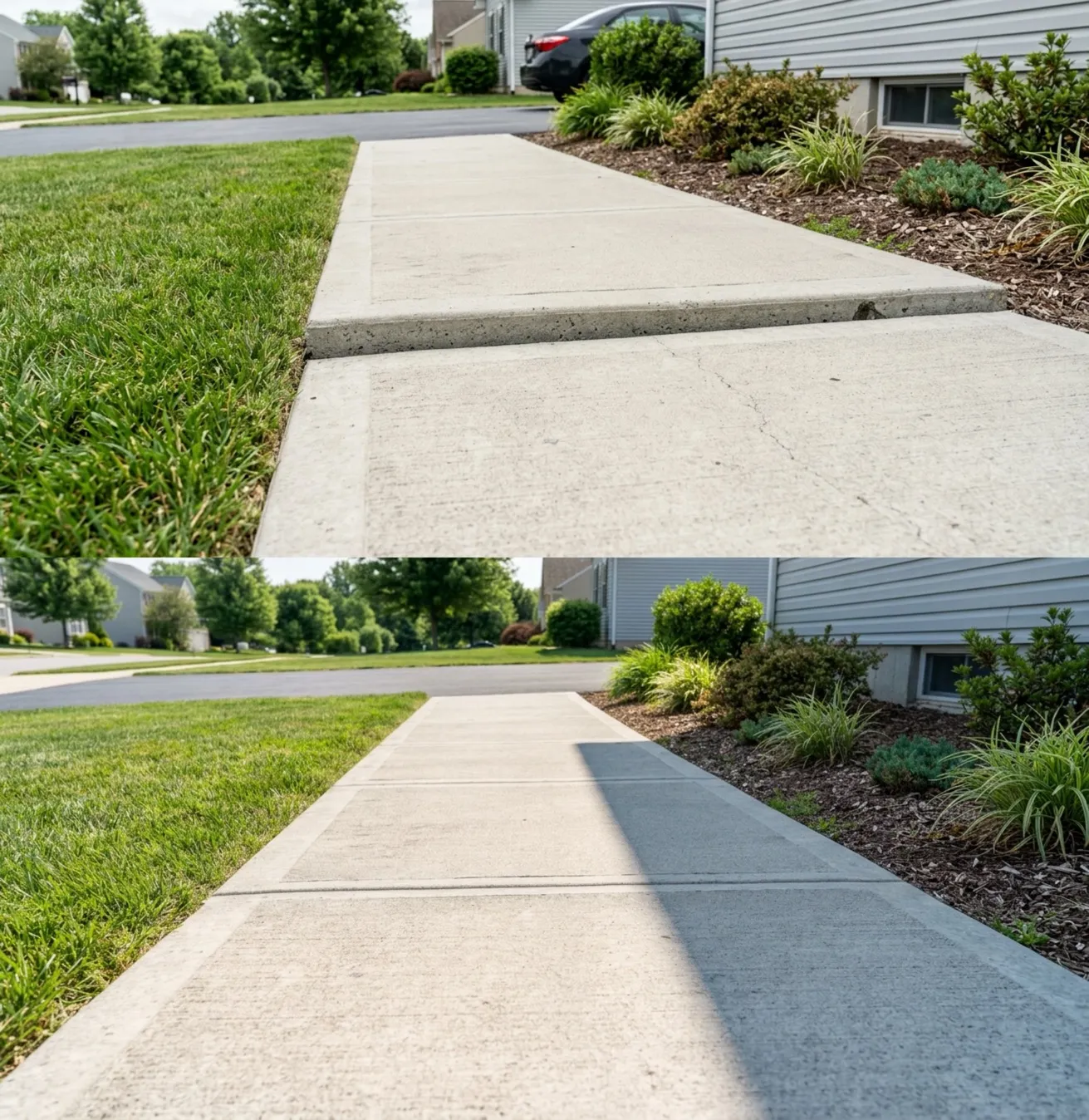
- A raised edge at a joint or crack. One panel has dropped, which can be a trip hazard.
- A patio or walk that slopes toward the house. Rain then runs toward the wall, so the slope and the drainage both need a look.
- A gap between the slab and a step, porch or wall. The slab may have dropped, or the part beside it may have moved.
- A garage floor that has dropped near the door or cracked across. It may be ordinary cracking or settled ground below.
- Puddles that stay on a slab after rain. A low spot may have formed where the slab sank.
- A hollow sound when you tap the slab. It may point to a void below.
Take photos and note the date, so a contractor can see whether the slab keeps moving.
Concrete Leveling in Charlotte, NC: Slurry, Foam, Grinding or Replacement
Concrete leveling in Charlotte, NC is one of four ways to deal with a sunken slab. The right one depends on the slab's condition and on why it sank.
| Option | What it does | Fits when | Limits |
|---|---|---|---|
| Cement slurry lifting (mudjacking) | A cement and soil mix is pumped through holes drilled in the slab and pushes it up | A slab that is mostly in one piece has sunk and the added weight is acceptable | The mix is heavy, and the holes are usually larger than those used for foam |
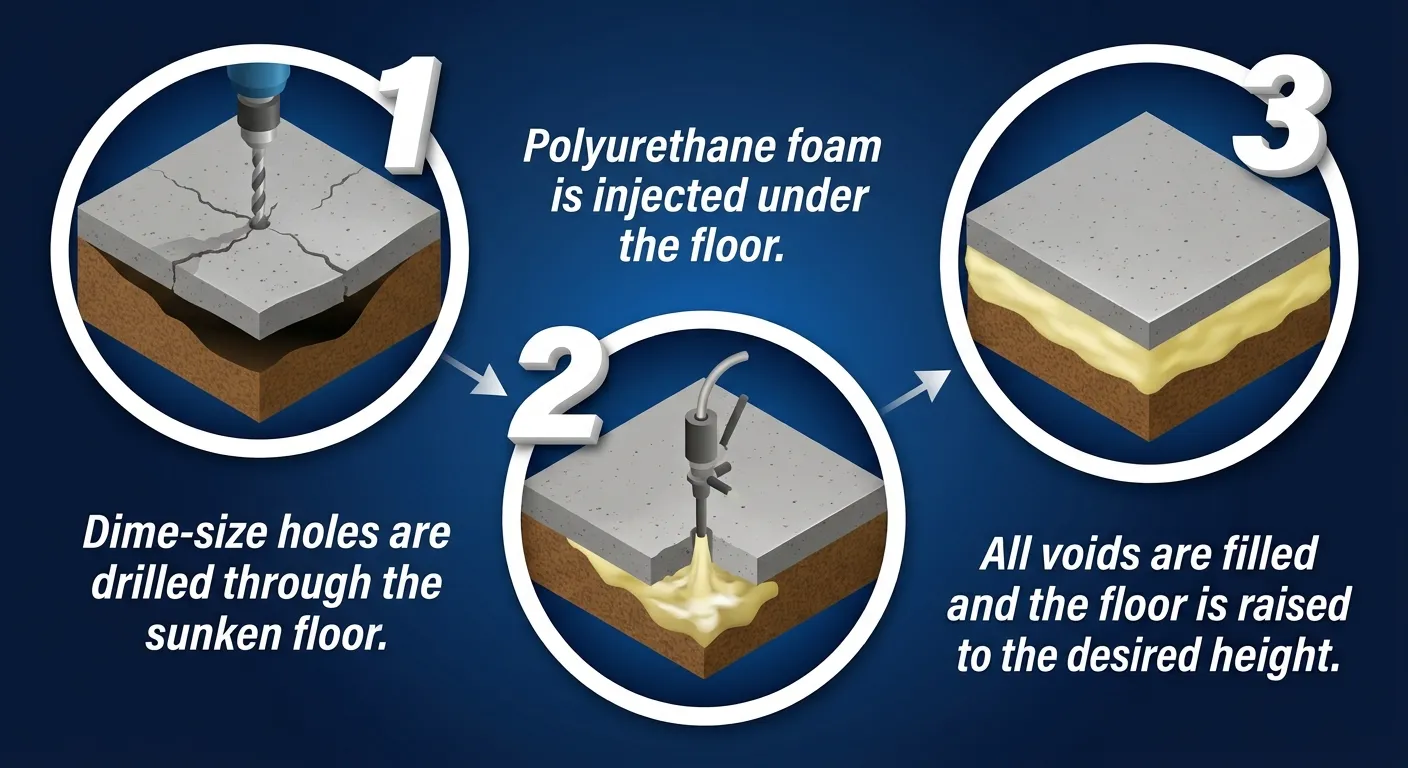
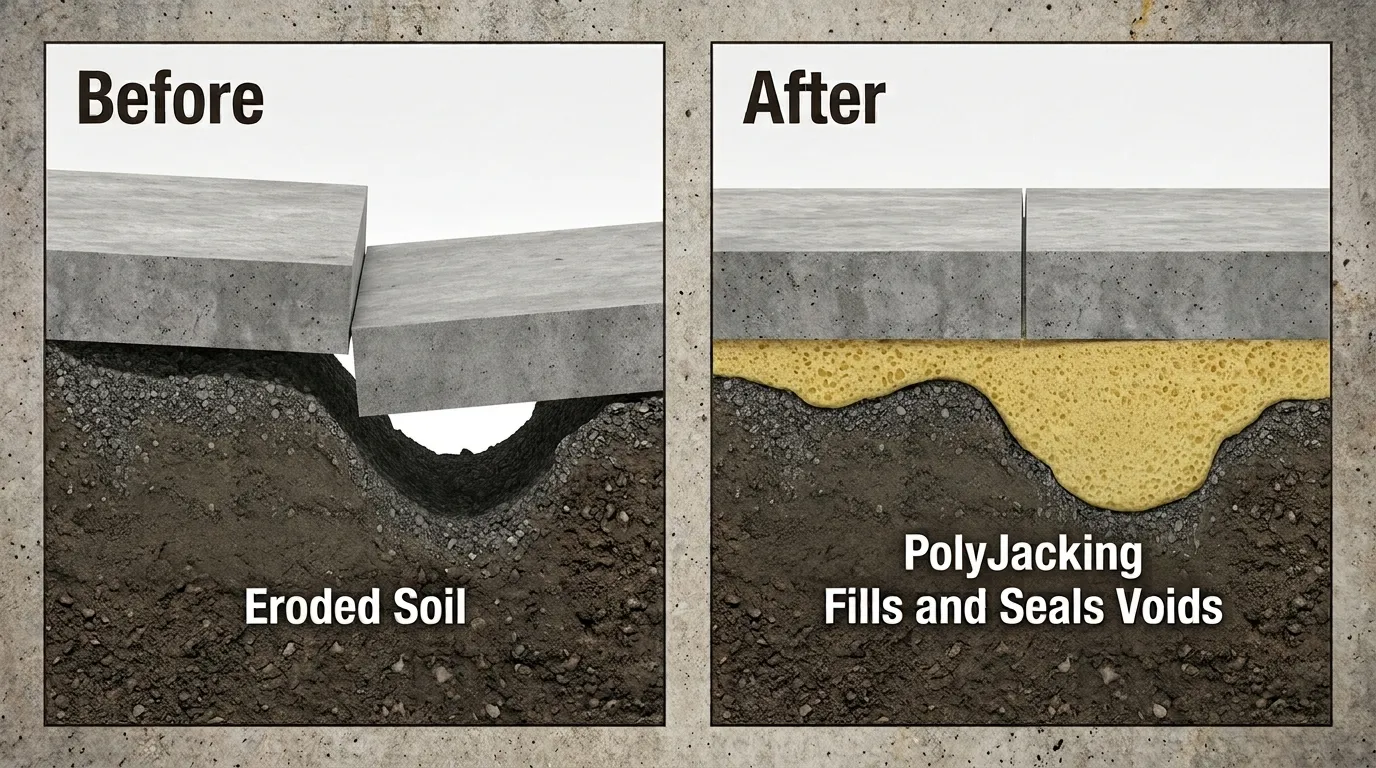
| Foam lifting (polyjacking) | A foam is injected through small holes, expands under the slab, fills voids and lifts it | Weight is a concern, or the contractor finds voids under the slab | The slab must be in fair shape, and the foam does not stop water from reaching the ground |
| Grinding or patching the edge | A raised edge is ground down or filled so the step is gone | The only trouble is a small step at a joint | The slab stays low, so the slope and the cause remain |
| Replacement | The old slab is broken out and a new one is poured | The slab is broken into pieces, crumbling or too far gone to lift | It is messier, and a new slab on the same ground may sink again if the cause is still there |
Steps in a Typical Slab Lift
- Look at the slab. Walk the slab with the contractor. Point out low spots, cracks, gaps at the house and where the downspouts empty.
- Find the cause. The contractor checks for water paths, wet spots and hollow spots. Only an inspection shows what moved the ground, and drainage work may come first.
- Choose the method. For concrete leveling, slurry, foam, grinding or replacement is picked based on the slab's condition and what lies below it.
- Lift in small stages. Small holes are drilled and the filler is pumped in a little at a time. The level is checked as the slab rises, and the slab is watched for new cracks.
- Seal and walk through. After the concrete leveling, the holes are filled and the surface is cleaned. You look over the result together, and you can ask about downspouts and grading.
What Can Move the Cost of a Slab Lift
These are the things that move the price of concrete leveling. A licensed and insured contractor will look it over and give you a free estimate through the estimate page.
- Size. The area of the slab and the number of slabs on the lot.
- How far it dropped. A larger drop takes more filler and more care.
- Method. Slurry, foam, grinding and replacement each use different materials and labor.
- Voids and slab condition. Large voids take more filler, and a badly cracked slab may not lift well.
- Access. Room for hoses and equipment, slopes, and plants or fences in the way.
- Water work. Downspouts, grading or drains that must be fixed so the slab does not sink again.
- Finish. Patching the holes and how closely the patches must match the concrete.
Water under a slab is often handled by drainage and water control, which is priced on its own.
Creek Bottoms, Heavy Rain and the Ground Under a Slab
The ground under a slab differs from place to place. A contractor checks water and soil before choosing a lift. These are the sourced facts.
Soil samples from six towns. The USDA NRCS Soil Data Access service (queried October 7, 2026) gave 130 natural-soil points across six towns: Concord, Gastonia, Huntersville, Indian Trail, Matthews and Mooresville.
At 13 the soil is rated for frequent or very frequent flooding. At 15 it has a linear extensibility of 6 or more, a measure of shrink and swell. A point is not a lot, so this shows the mix and not your yard.
Rain. The NOAA 1991-2020 Climate Normals for Charlotte Douglas Airport give 43.60 inches of precipitation a year and 11.5 days a year with at least 1 inch. That is one gauge, not every town.
Mapped flood zones. The FEMA National Flood Hazard Layer was checked at points in five counties on October 7, 2026. Of 632 points, 51 fell in a Special Flood Hazard Area and the rest in zone X, minimal hazard.
Creek flooding. WRAL reported that Little Sugar Creek reached a record crest of 15.2 feet in November 2020.
None of this says a given slab will sink. It does show why a slab by a creek or low spot gets a look at drainage as well. A foundation inspection helps when a slab meets the house.
Concrete Leveling & Polyjacking Questions in Charlotte, NC
What is the difference between mudjacking, polyjacking and concrete leveling?
Concrete leveling is the job, which is raising a sunken slab back to level. Mudjacking pumps a cement mix under the slab, and polyjacking injects a foam. A licensed and insured contractor can look it over and suggest which one fits.
Can a sunken driveway in Charlotte be lifted, or does it need replacing?
Concrete leveling may work on a slab that is mostly in one piece. A slab broken into pieces or crumbling may need replacing. Only an inspection shows which applies.
Will a slab sink again after concrete leveling?
It may, if the cause is still there. A contractor looks at the drainage and the ground, not only the slab. The soil survey shows frequently flooded soils at 13 of 130 sample points in six nearby towns.
Can a porch or garage slab that touches the house be lifted?
Some can. A gap beside a wall may mean the slab, the footing or both moved. Only an inspection shows which, and the foundation repair page covers the footing side.
What should I have ready before a concrete leveling visit?
For concrete leveling, take photos of the low spots and note when you first saw them. Mention where the downspouts empty and where water stands after rain. The work is performed by licensed and insured contractors.
Contact Us Today for a Free Estimate
Tell us which driveway, walk, patio or garage slab has sunk. A licensed and insured contractor will look it over and give you a free estimate.