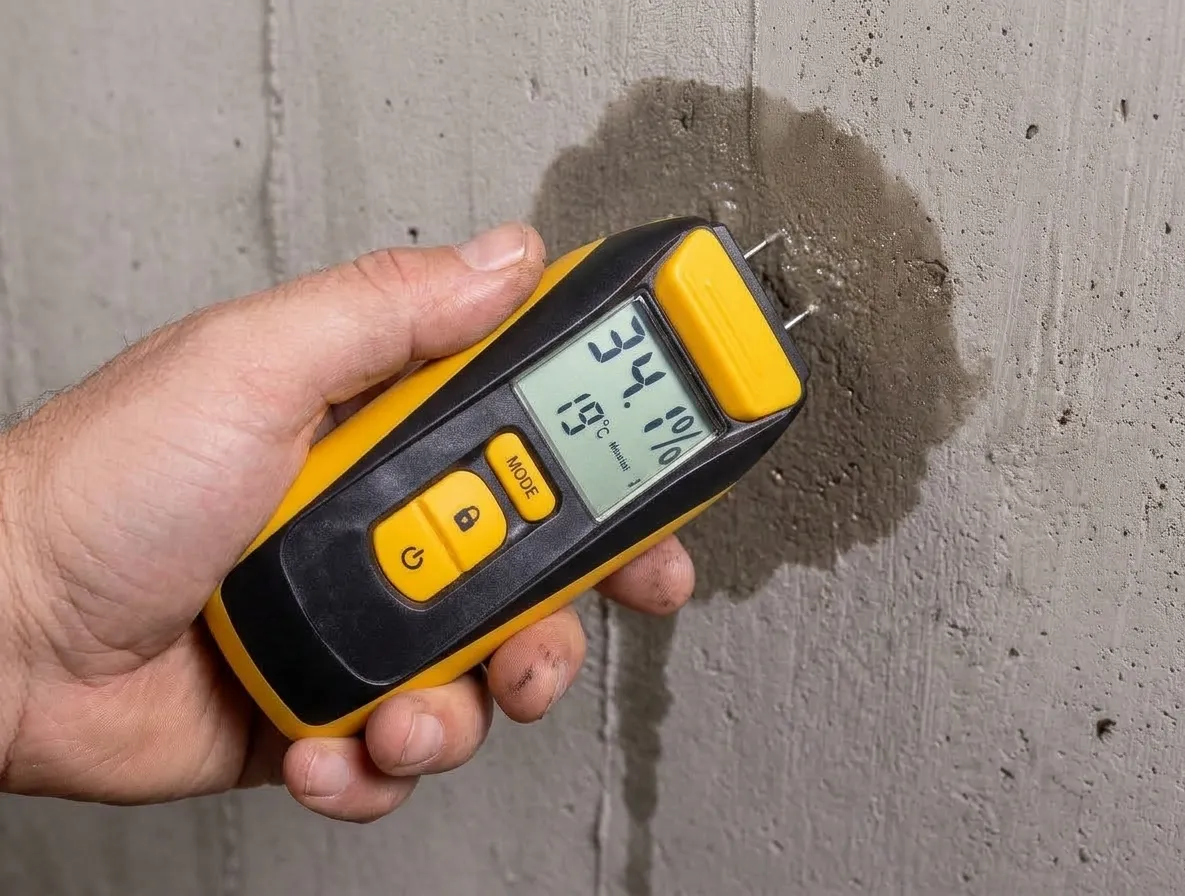
Crawl Space Encapsulation & Vapor Barriers
Crawl Space Encapsulation & Vapor Barriers in Charlotte, NC
Crawl space encapsulation in Charlotte, NC starts with water: NOAA normals show measurable rain on about 112 days a year.
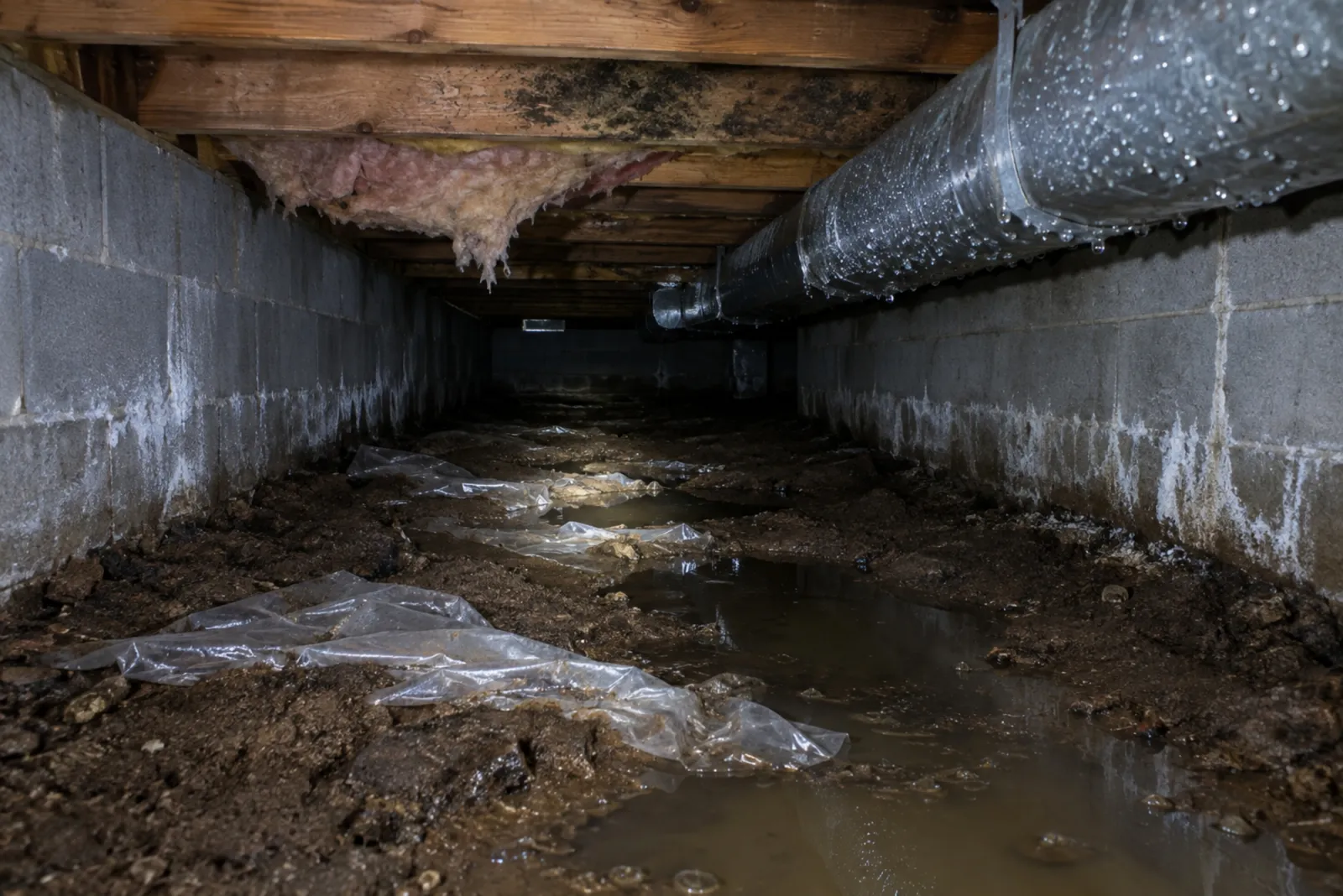
Musty Smells, Damp Insulation and Sweating Pipes: What to Look For
Look for these signs that crawl space encapsulation may help. Each one can have more than one cause, and only an inspection confirms which applies.
- A musty smell in the rooms above. Air from below can rise through gaps in the floor, so the smell may start under the building.
- Damp, sagging or fallen insulation between the joists. It may have absorbed moisture from the air or from a leak.
- White or dark growth on joists or the subfloor. It can mean the wood stays damp. Only testing and an inspection show what it is.
- Wet soil or standing water after rain. Water may be entering at the wall, or running in from the yard.
- Beads of water on ducts or pipes. Cool surfaces in damp air can collect condensation.
- Wood floors that cup, gap or feel soft. Wood takes on moisture from below, but a plumbing leak can do the same.
- Rusty nails, fasteners or metal straps under the floor. They may point to long-term dampness.
Take photos and note the date after a rain. A contractor can then see whether the signs change.
Crawl Space Encapsulation in Charlotte, NC: Barrier Only or Fully Sealed?
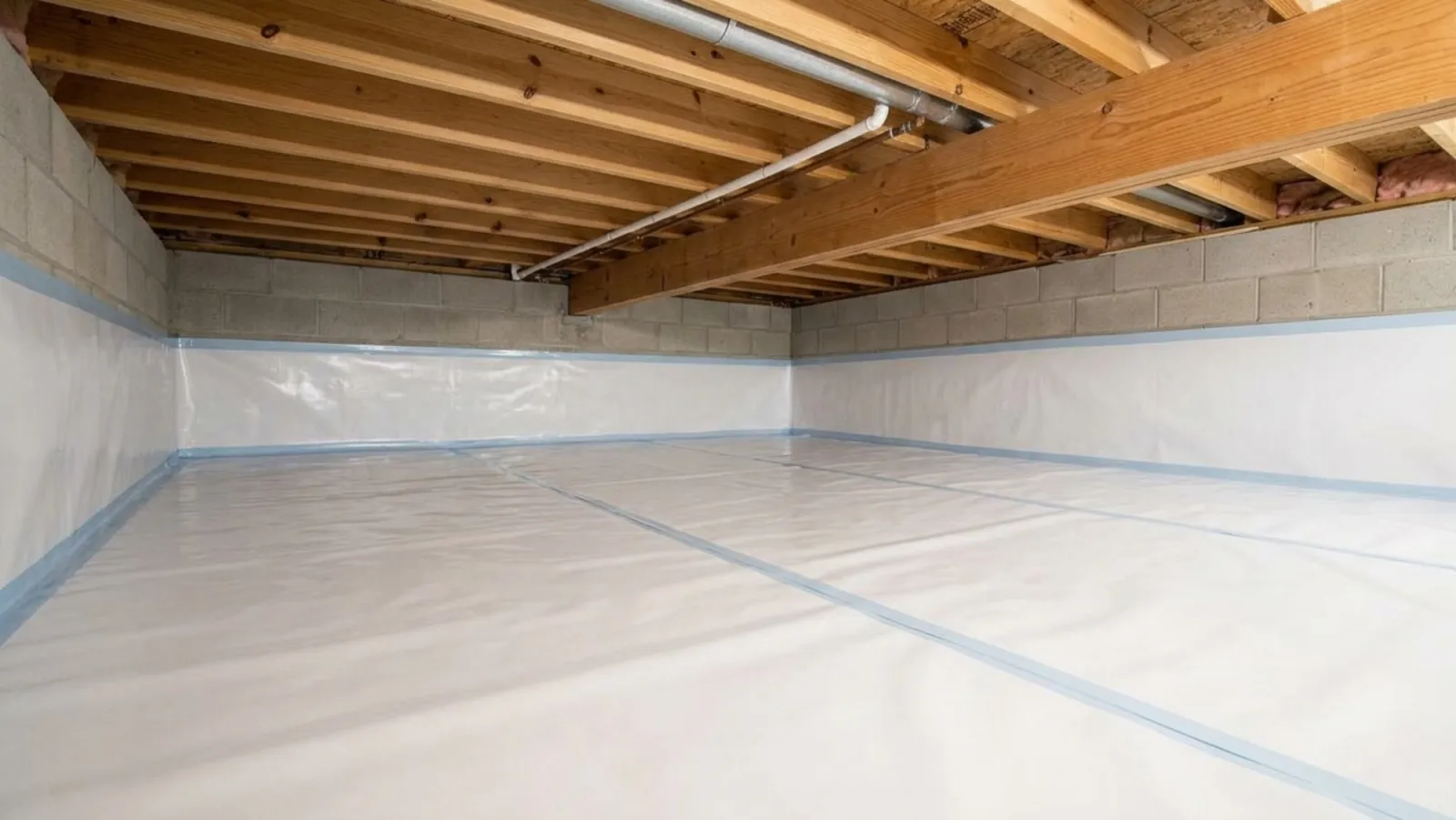
Crawl space encapsulation in Charlotte, NC covers a range of work, from a simple ground sheet to a fully sealed and dried space. The right level depends on how the water gets in. A foundation inspection can sit alongside it.
| Option | What it does | Fits when | Limits |
|---|---|---|---|
| Ground vapor barrier | A plastic sheet laid over the soil to slow moisture rising from the ground | The soil is damp but the walls and vents are not the main problem | Air still moves in through vents and walls, and it does not stop running water |
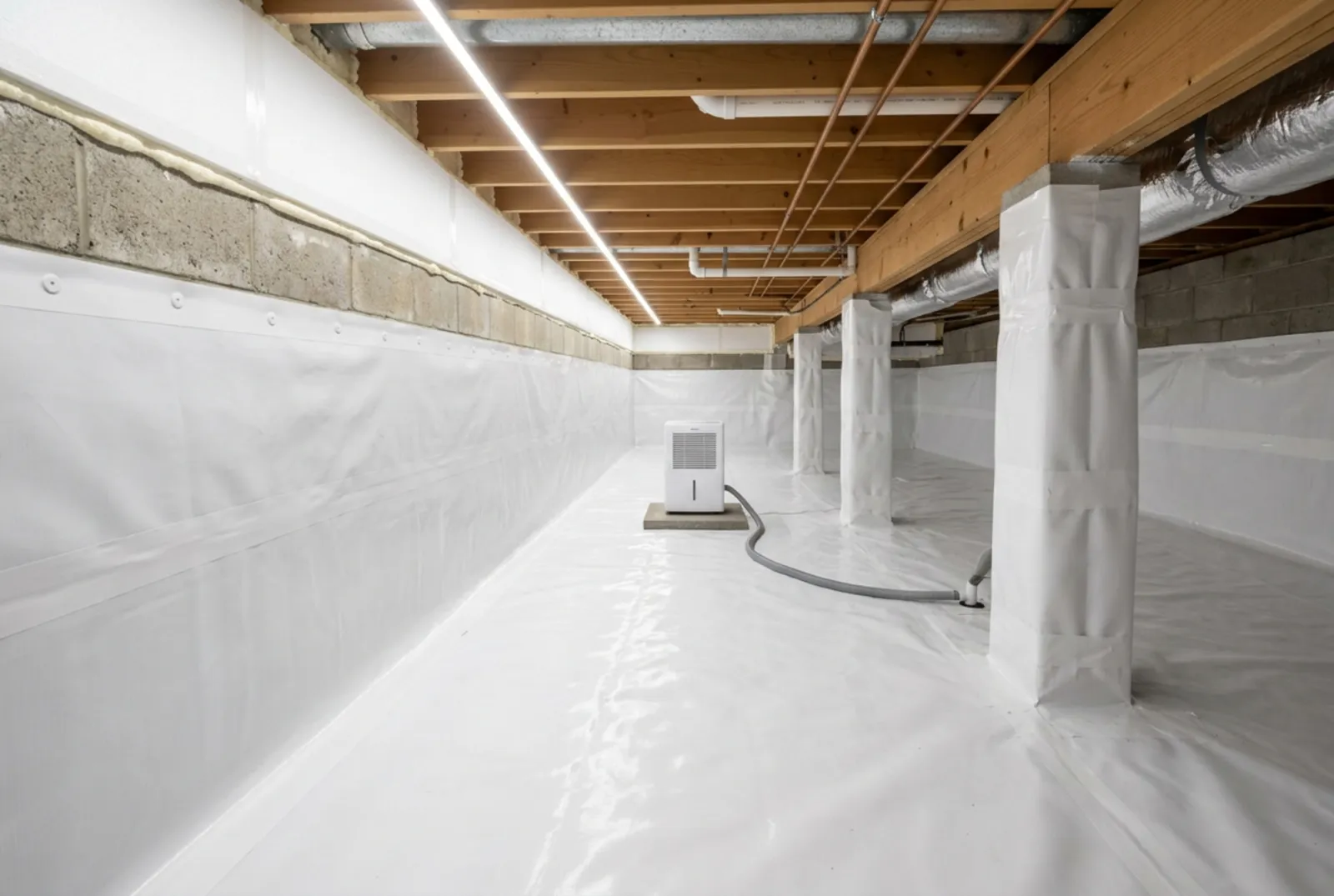
| Full encapsulation | The sheet runs up the walls, seams are sealed, and vents are closed off | The goal is to treat the crawl space as part of the conditioned building envelope | Needs a plan for moisture control, and for any water that enters |
| Dehumidifier or conditioned air | Removes moisture from the sealed space, or ties it to the building's air system | An encapsulated space still holds damp air | Uses power and can involve mechanical or electrical work |
| Interior drain and sump pump | Collects water that enters and moves it out of the space | Water shows up after rain, not just damp air | It handles water that gets in, but does not stop it getting in |
| Repairs before sealing | Replaces wet insulation and fixes damaged wood or leaking pipes | The inspection finds damage or a leak | Sealing over a problem hides it, so repairs come first |
Steps in a Typical Crawl Space Project
- Inspect the space. Every crawl space encapsulation job starts here. A licensed and insured contractor looks at the soil, walls, vents, insulation, ducts and wood. Only the inspection shows where the moisture comes from.
- Deal with the water source. Roof water, grading, leaking pipes and wall seepage are checked first. A barrier does not fix water that keeps coming in.
- Clean and prepare. Debris and wet or ruined insulation are removed. Damaged wood is noted for repair.
- Install the barrier and seal. The sheet is laid over the ground, with seams sealed. For full encapsulation it also runs up the walls and the vents are closed.
- Add moisture control and review. A dehumidifier, drain or pump is added where the plan calls for one. The contractor walks the space with you and explains what was done.
What Moves the Price of a Crawl Space Job
The price of crawl space encapsulation depends on the job, not a single rate. These items move it:
- The size of the crawl space and how much headroom there is to work.
- How easy it is to reach and move around in, including the access hatch.
- Debris, old insulation or standing water to clear before work starts.
- The grade and thickness of the barrier, and how much of the walls it covers.
- Drains, a sump pump or a dehumidifier, and any power or ducting they need.
- Repairs to wood, pipes or ducts that the inspection finds.
- Fixes for water sources outside, such as gutters or grading (see drainage and water control).
For figures from outside guides on crawl space encapsulation, see the crawl space encapsulation cost page. A free estimate comes after the inspection.
Rain, Creek Bottoms and Permits Around Charlotte
Local records point to several water sources a crawl space encapsulation plan may need to cover. They do not show how a given crawl space behaves.
- Rain. The NOAA 1991-2020 climate normals for Charlotte Douglas airport list 43.60 inches of precipitation a year and 112.4 days a year with measurable rain. It also lists 49.2 days a year at 90F or hotter. That is one gauge at the airport, not every town.
- Creek-bottom soils. Of 130 soil sample points across Concord, Gastonia, Huntersville, Indian Trail, Matthews and Mooresville, the USDA soil survey (queried October 2026) rates 13 as frequently flooded. A point is not a lot.
- Seasonal water in the soil. The Iredell series description lists a perched water table 1 to 2 feet down from December to April. The Helena series description lists one 18 to 30 inches down from January to April. The survey places these soils in Mecklenburg and Cabarrus Counties.
- A state permit interpretation. The North Carolina Office of State Fire Marshal updated an interpretation on December 11, 2025. It says that under the 2018 North Carolina Residential Code, closing a conventional crawl space needs a permit in some cases. These include work that changes heating, cooling or electrical systems.
The sources give no local count of homes with crawl spaces, so this page makes no claim about how common they are.
Crawl Space Encapsulation & Vapor Barriers Questions in Charlotte, NC
What is the difference between a vapor barrier and crawl space encapsulation?
A vapor barrier is a plastic sheet over the soil that slows moisture rising from the ground. Crawl space encapsulation goes further, with the sheet up the walls, sealed seams and closed vents. An inspection shows which fits.
Does the rain around Charlotte mean my crawl space will be damp?
Not by itself. NOAA normals list measurable rain on about 112 days a year at the airport gauge, but each building handles water differently. Grading, gutters, pipes and soil all matter, so only an inspection shows where moisture comes from.
Does closing a crawl space need a permit in North Carolina?
The State Fire Marshal's office says that under the 2018 North Carolina Residential Code, closing a conventional crawl space needs a permit in some cases. One case is work that changes heating, cooling or electrical systems. Your local building office can say what applies at your address.
My lot is near a creek. Is crawl space encapsulation still possible?
It depends on the water. The soil survey shows frequently flooded soils at 13 of 130 sample points in six nearby towns, and a plastic sheet does not stop running water. A licensed and insured contractor can check the drainage first.
Will encapsulation fix sagging floors or cracks in the walls?
Not by itself. Crawl space encapsulation treats damp air and wet soil, while sloping floors or wall cracks can have other causes. If you see them, ask for a foundation inspection too.
Contact Us Today for a Free Estimate
Tell us what you smell or see under the floor, and ask about crawl space encapsulation. A licensed and insured contractor will look it over and give you a free estimate.