Drainage & Water Control
Drainage & Water Control in Charlotte, NC
French drain and grading work in Charlotte, NC starts with where water goes. The soil survey flags creek-bottom soils in all six sampled towns.
Pooling, Washouts and Damp Walls: What They May Mean
Water problems often show outside first. Each sign below can have more than one cause, and only an inspection confirms which one applies.
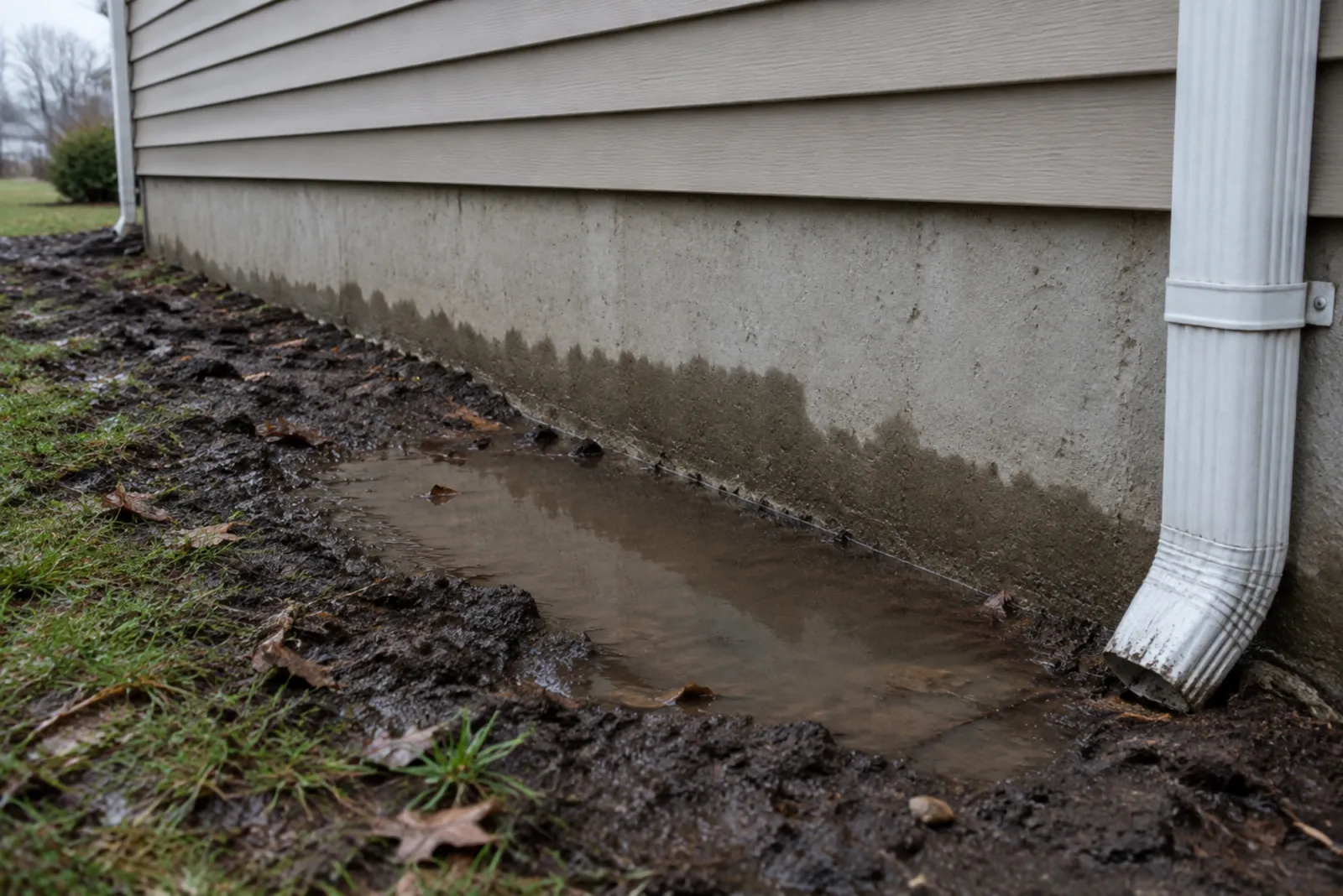
- Water standing beside the wall after rain. The ground may slope toward the building, or the water may have nowhere to go.
- Soil washed out under a downspout or along the wall. Fast water can carry soil away and leave a trench or bare patch.
- Gutters that overflow or downspouts that end at the wall. The roof water may be landing where it can soak in beside the footing.
- Soggy ground in the yard days after the rain stopped. Water may be collecting in a low spot or coming from higher ground, which is where a French drain is often considered.
- Dampness, a musty smell or white mineral crust on a crawl space or basement wall. Water may be getting in, if the building has one of these.
- Soil, mulch or flower beds piled against the siding. Water can run toward the wall instead of away from it.
- Cracks or sticking doors near a wet corner. Wet ground may be one reason, but cracks have other causes too, so see the foundation repair page.
Take photos during a rain and note the date, so a contractor can see where the water goes.
French Drain in Charlotte, NC: Drains, Grading and Gutters Compared
A French drain in Charlotte, NC is only one of several ways to handle water. The right mix depends on where the water starts and where it can leave the property.
| Option | What it does | Fits when | Limits |
|---|---|---|---|
| Gutters and downspout extensions | Collects roof water and carries it away from the wall | Roof water is landing next to the building | Does nothing for water that arrives from the yard or higher ground |
| Regrading | Reshapes the soil so the surface slopes away from the wall | The ground near the wall is flat or slopes toward it | Needs room to slope, and cannot fix water that sits below the surface |
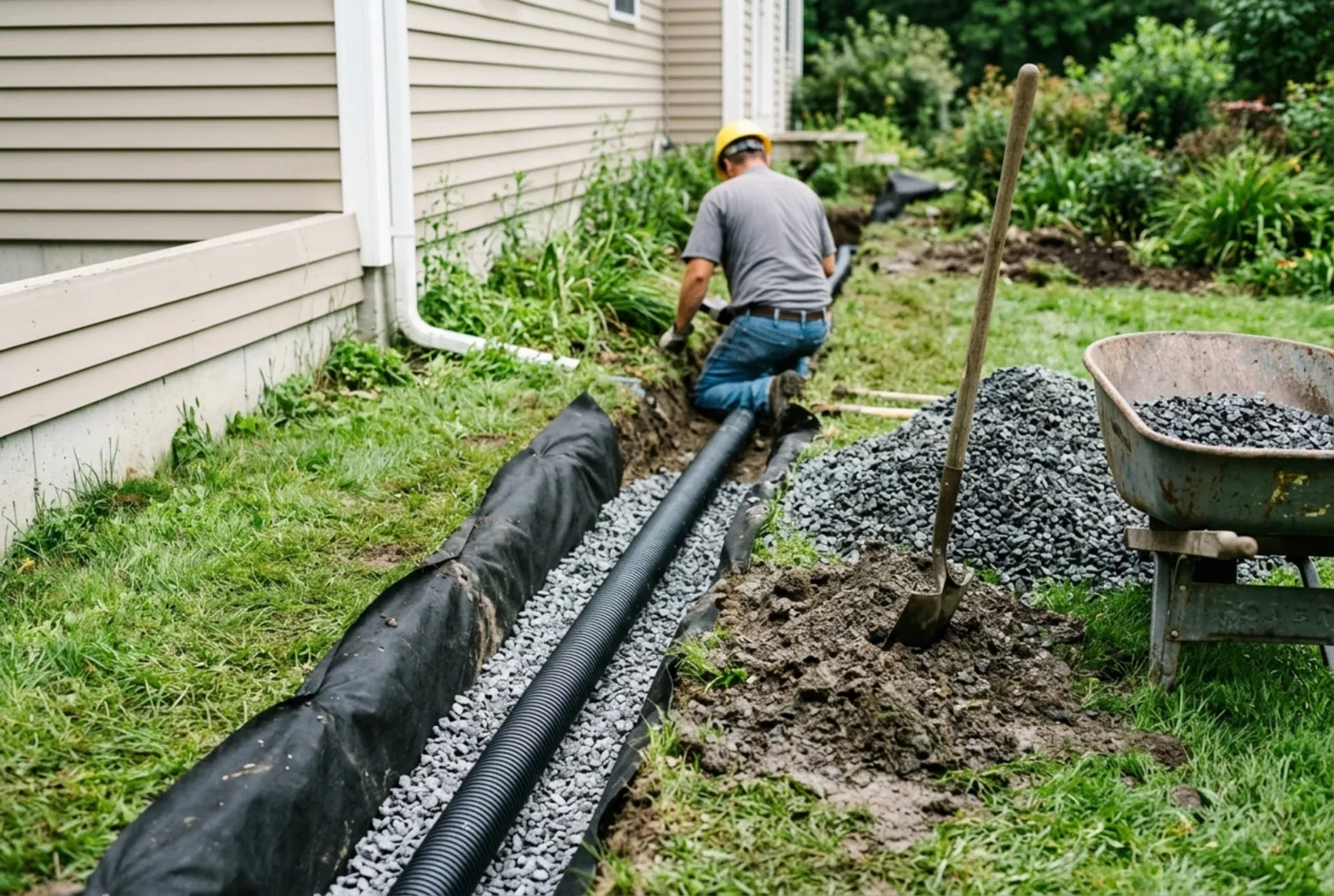
| French drain | A perforated pipe in a gravel-filled trench that collects ground water and carries it to a lower outlet | A yard or slope stays soggy and the water has a place to leave | Needs an outlet lower than the drain, and it can clog if not kept clear |
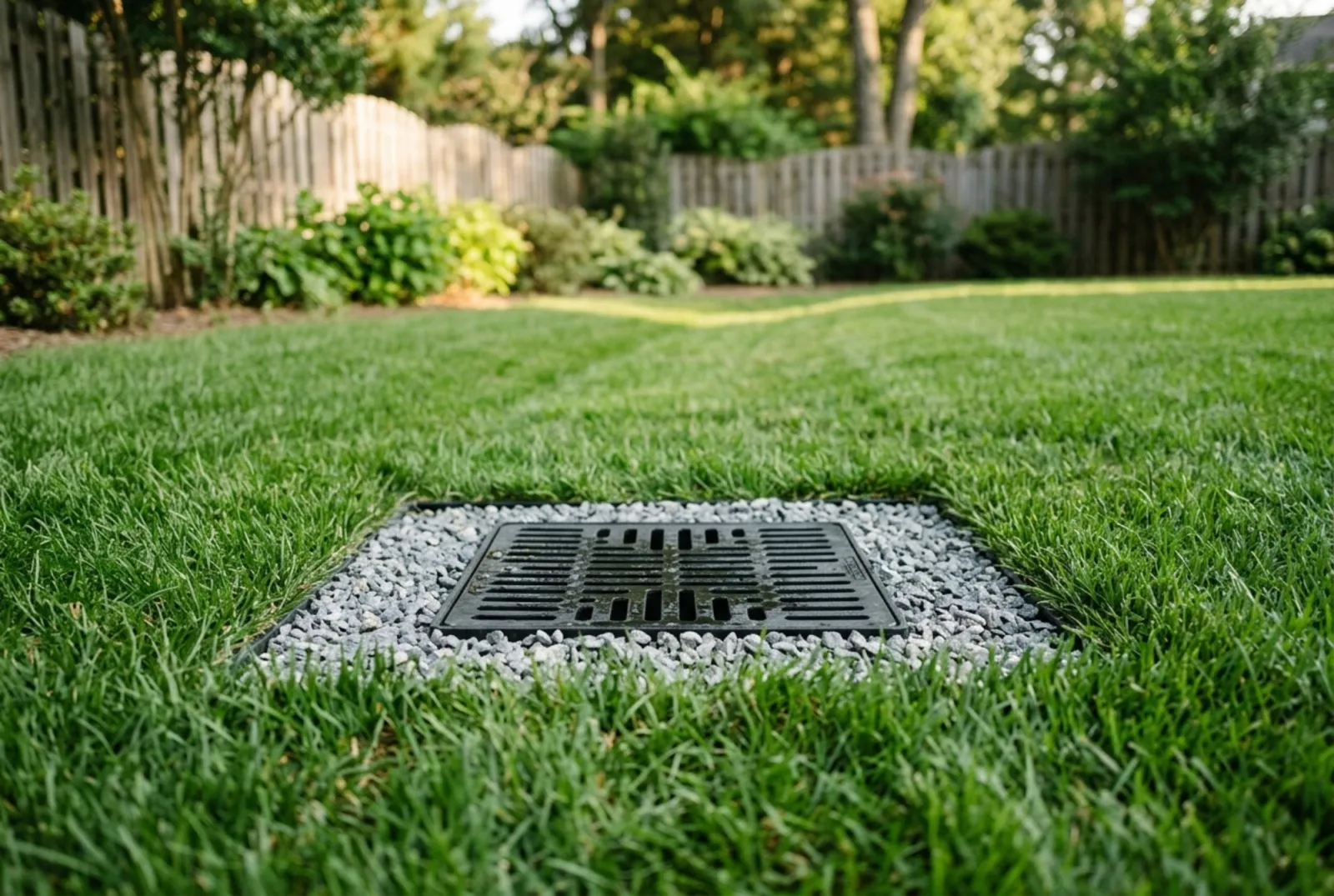
| Surface drain with catch basin | A grated inlet and buried pipe that take pooled surface water away | Water collects in a low spot and cannot run off | Handles surface water only, and needs an outlet |
| Interior drain or sump pump | Collects water that has reached the inside and pumps it out | Water already shows inside a crawl space or basement | Treats water at the wall, not where it starts; see sump pumps and interior drainage |
How a Yard Drainage Job Usually Goes
- Tell us where the water goes. Describe the pooling, washouts or damp walls and when they show up. Photos taken during a rain help. Nothing is decided at this stage.
- A contractor walks the site. The visit decides whether a French drain, regrading or gutter work fits. It covers the gutters, downspouts, grade, low spots and any wet walls. It also checks where water could leave the property, because every drain needs an outlet.
- The plan is written down. The estimate names the fixes, where each drain or pipe runs and where the water ends up. If the cracks need a look too, the foundation inspection comes first.
- The work is done. Gutters are fixed, soil is reshaped or the French drain and other drains are laid as planned. The work is performed by licensed and insured contractors.
- The result is checked in the next rain. A walk-through after a rain shows whether the water now moves where the plan says. Anything that still pools can be reviewed.
What Moves the Price of Yard Drainage Work
These things move the price of drainage work. No figures are given here, because each estimate is written for one property.
- How long the drain or pipe run is.
- Whether the water can leave by gravity or needs a pump.
- The kind of drain: a French drain, a surface drain or both.
- How deep and wide the French drain trench has to be, and how much gravel it needs.
- How much soil moving or regrading the lot needs.
- Access for equipment, such as fences, decks, trees and tight side yards.
- What lies on the path, such as a driveway, walk or patio that must be cut and replaced.
- Gutter and downspout repairs that belong in the plan.
- Restoring the lawn, beds or paving after the work.
The estimate page explains how to ask for a free estimate that lists these items for your property.
Creek Bottoms, Perched Water and Storm Water Services
Water behaves differently from lot to lot in the Charlotte area. These are the sourced facts.
Creek-bottom soils in every sampled town. The USDA NRCS Soil Data Access service (queried October 7, 2026) gave 130 natural-soil points in Concord, Gastonia, Huntersville, Indian Trail, Matthews and Mooresville. The survey rates 13 of them as frequently flooded: Concord 2, Gastonia 2, Huntersville 1, Indian Trail 3, Matthews 4 and Mooresville 1.
A point is not a lot, so this shows the mix and not your yard. Near a creek, a French drain still needs an outlet that stays lower than the drain.
Water that sits in the ground. The NRCS Iredell series description lists a perched water table 1 to 2 feet deep from December to April. The Helena series description lists one 18 to 30 inches deep from January to April.
Creek floods and storm programs. WRAL reported that Little Sugar Creek reached a record crest of 15.2 feet in November 2020. The Mecklenburg County Floodplain Buyout Program page says the county has bought more than 490 homes since 1999.
A county news release of November 8, 2024 says about 170 homes near Mountain Island Lake were damaged in Hurricane Helene.
Public drainage and your yard. Matthews is part of Charlotte-Mecklenburg Storm Water Services. The Matthews stormwater page says the town handles public drainage, and that yard flooding or ponding typically does not qualify for that help.
The Concord city flood page says part of the city lies in Special Flood Hazard Areas.
See the Matthews and Concord pages for the towns themselves.
Drainage & Water Control Questions in Charlotte, NC
Will the county or town fix water pooling in my yard?
It depends on where the water is. The Matthews stormwater page says the town handles public drainage and that yard flooding or ponding typically does not qualify. Check your own town's stormwater office, then ask a contractor about the private side.
Is a French drain right for my yard in Charlotte, NC?
A French drain can be right when ground water collects and there is a lower place for it to go. Roof water or a flat grade may call for gutters or regrading instead of a French drain. Only an inspection shows which one fits.
My property is near a creek. Will drainage work stop flooding?
Drainage work moves rain and ground water, but it does not stop a creek from rising. The county 3D Floodzone Maps tool and the Mecklenburg Floodplain Buyout Program are the places to ask about flood zones. A contractor can then plan the French drain and other drains around that.
Can I wait on drainage work because the spring 2026 drought was so dry?
Dry weeks can hide a problem, because pooling and washouts show up in heavy rain. WBTV reported exceptional drought in Mecklenburg, Cabarrus and Union Counties in spring 2026. Note the wet spots during the next storm so a contractor can see them.
Can a French drain or better grading fix cracks in my foundation?
A French drain or regrading removes one possible cause of movement, but it does not close cracks or lift a footing that has dropped. Only an inspection shows why a wall cracked. See the foundation repair page if the cracks keep growing.
Contact Us Today for a Free Estimate
Tell us where water gathers around your building. A licensed and insured contractor will look it over and give you a free estimate.