Foundation Repair & Piering
Foundation Repair & Piering in Charlotte, NC
Foundation repair in Charlotte, NC starts with the ground, which the soil survey shows changes from one map unit to the next.
Cracks, Sticking Doors and Sloping Floors: What They May Mean
Look for these signs of foundation trouble. Each one can have more than one cause, and only an inspection confirms which applies.
- Stair-step cracks in brick or block. They can mean one part of the footing has dropped, or that the wall has been pushed.
- Doors and windows that stick or will not latch. The frame may have shifted out of square.
- Gaps at the trim, ceiling or window frames. A gap that grows over the seasons may point to movement.
- A floor that slopes or feels uneven. It may come from the support below, or from the framing.
- Cracks in a garage or slab floor. They may be ordinary drying cracks, or a sign that the ground under the slab has moved.
- A porch, step or chimney pulling away from the wall. Each part can settle at its own rate.
- A crack that reopens after patching. It suggests something is still moving.
- A low, wet spot beside the wall where cracks show. Water may be carrying soil away, which a pier alone does not fix.
Take photos and note the date, so a contractor can see whether the signs are changing.
Foundation Repair in Charlotte, NC: Piers and Other Fixes Compared
Foundation repair in Charlotte, NC is not one fix. The right choice depends on what the inspection finds under the footing and how the water moves around it.
| Option | What it does | Fits when | Limits |
|---|---|---|---|
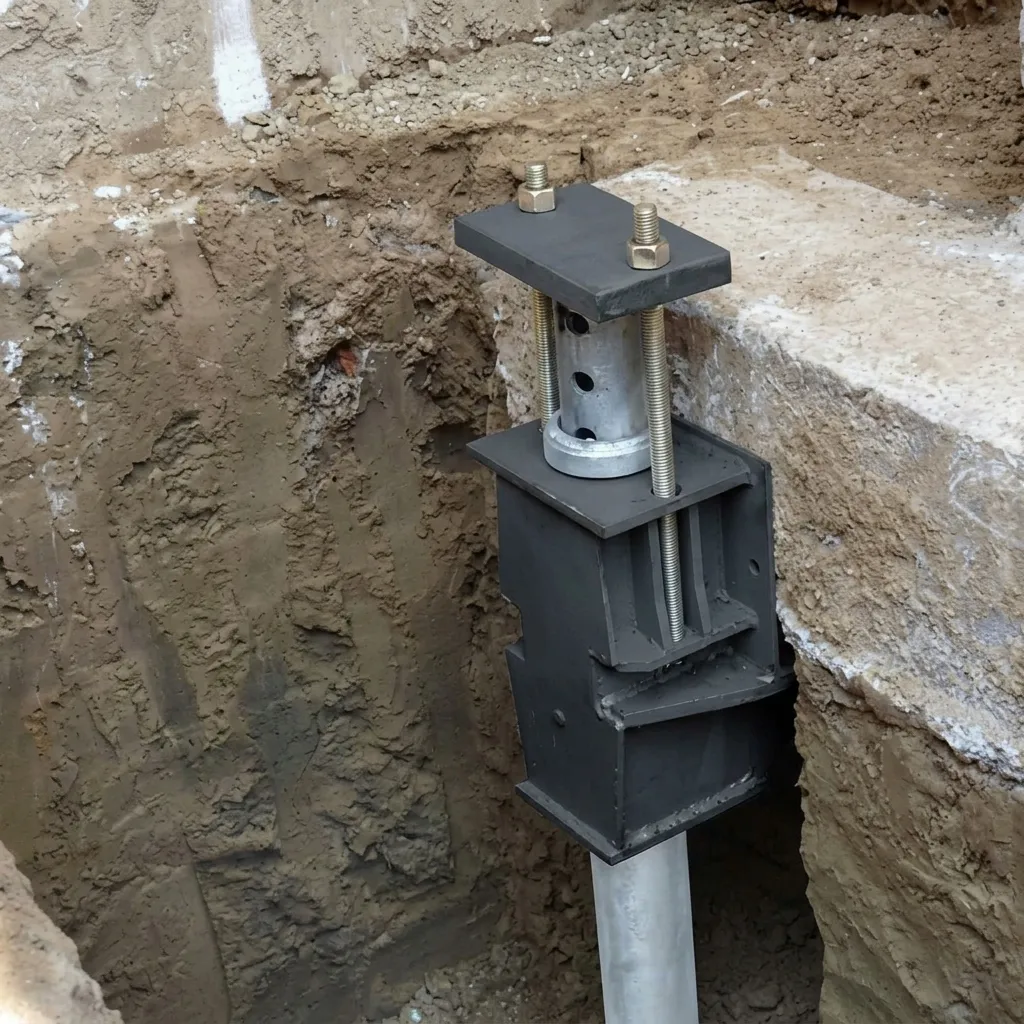
| Push pier | A steel tube pressed down beside the footing until it meets firm ground, then used to hold or raise that spot | A footing has dropped and firmer ground lies below the upper soil | Needs room for the equipment and enough building weight to press against |
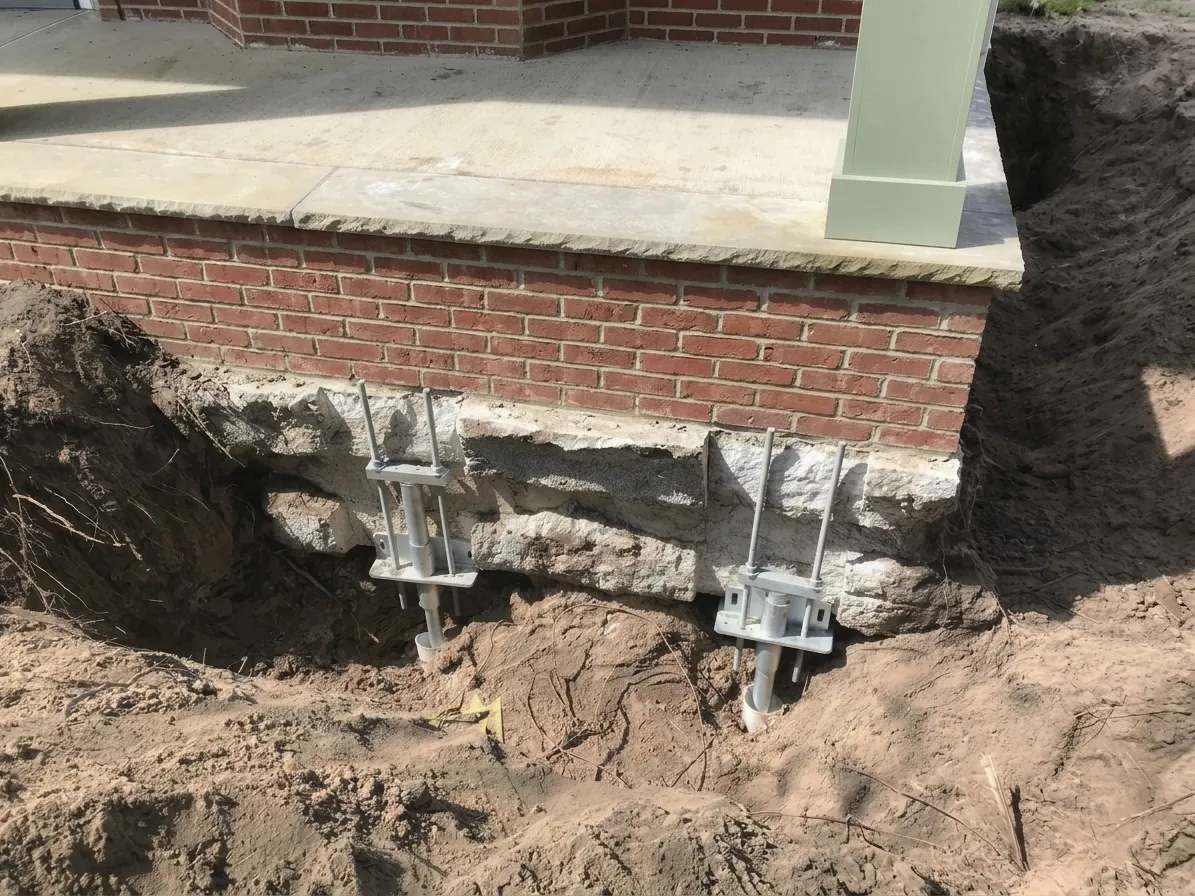
| Helical pier | A steel shaft with screw plates turned into the ground and tied to the footing | The load is light, such as a porch or addition, or a pressed pier would not hold | The plates have to be matched to the soil, and not every site suits it |
| Slab pier | A bracket and pier set to support the edge or the inside of a concrete slab | A slab floor, garage or addition has settled | It supports the slab but does not change why the soil moved |
| Water control first | Gutters, grading or drains that move water away from the wall | Wet soil is the likely cause and movement has been small | It does not raise or hold up a footing that has already dropped |
| Watch and measure | Marks and readings show whether a crack is still moving | A small, older crack with no other signs | It repairs nothing, and movement can continue |
Steps in a Typical Pier Repair
- Tell us what you see. Describe the cracks, doors or floors and where they are. Photos help. Nothing is decided at this stage.
- An inspection looks at the whole site. A contractor checks the cracks, the footing, the grade, the gutters and the wet spots. The foundation inspection is what shows the cause.
- The foundation repair plan is written down. The estimate names the repair type, how many support points are planned and what else, such as drainage, belongs in the job.
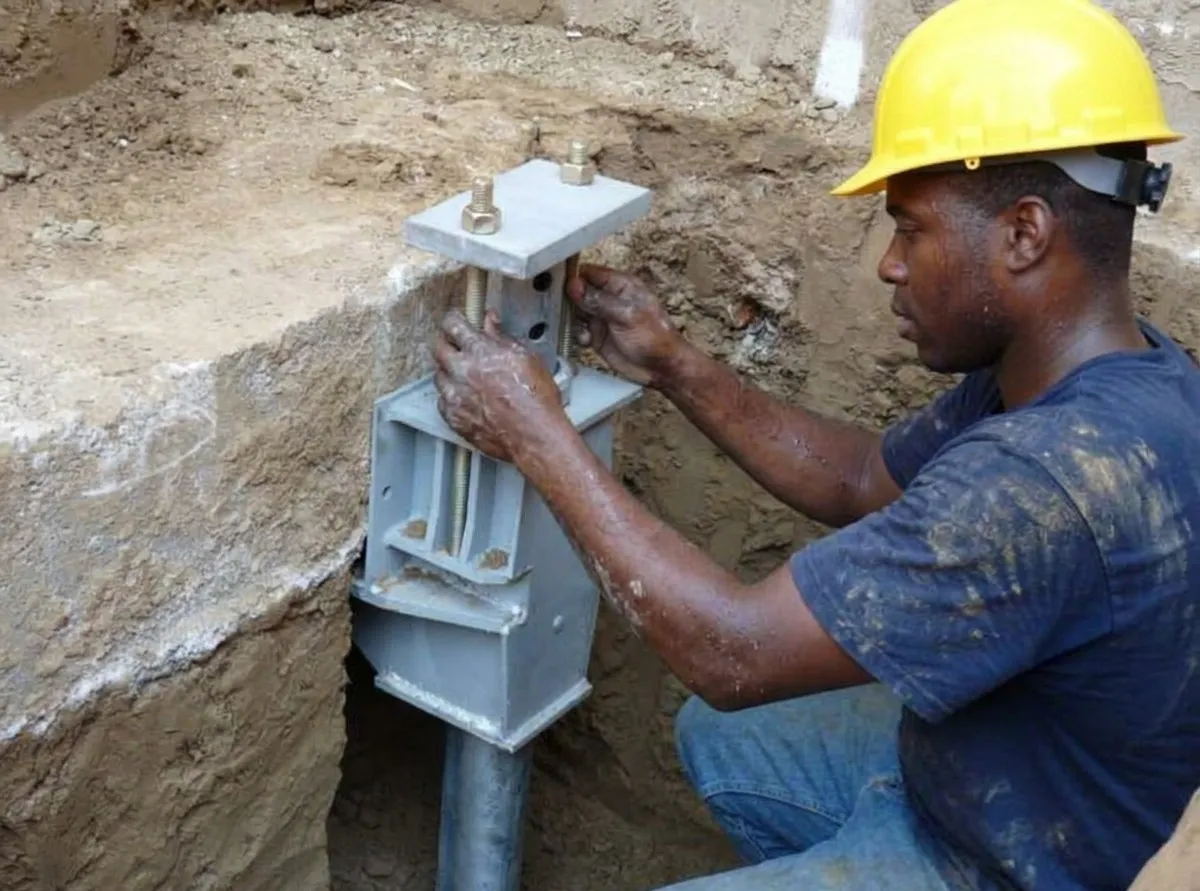
- The repair is done. Piers are set to firm ground or to the depth the plan calls for, and the building is raised or held as planned. Drainage work follows the same plan.
- A final check closes the job. The contractor walks the work with you, notes what moved and what did not, and tells you what to watch afterward.
What Makes One Pier Job Cost More Than Another
These things move the price of foundation repair with piers. No figures are given here, because ranges and their sources are on the foundation repair cost page.
- How many piers or support points the plan needs.
- The pier type: push, helical or slab.
- How far down firm ground lies at your lot.
- Access for equipment, such as tight yards, fences, decks or finished rooms.
- Whether the footing is a slab edge, a crawl space wall or a deeper wall.
- Wet ground, which may add water control work to the job.
- Reports or letters, such as an engineer's, that the job calls for.
- Repairs after the lift, such as closing cracks or resetting trim.
The work is performed by licensed and insured contractors, and each estimate lists these items for your property.
Mixed Clay, Creek Bottoms and Older Gaston Housing
The ground differs a lot across the Charlotte area, so a foundation repair plan is written for one lot at a time. These are the sourced facts.
Soil samples from six towns. The USDA NRCS Soil Data Access service (queried October 7, 2026) gave 130 natural-soil points in Concord, Gastonia, Huntersville, Indian Trail, Matthews and Mooresville. At 15 the soil has a linear extensibility of 6 or more, a measure of shrink and swell, and at 84 it is under 3.
Concord had 7 of its 19 points in the higher group, while Gastonia and Mooresville had none. A point is not a lot, so this shows the mix and not your yard.
Series descriptions. The NRCS Iredell series description rates shrink-swell very high in the subsoil. The Cecil series description rates it low in all layers, and Cecil is the most common series in the Mecklenburg and Gaston County samples.
The soil survey shows soils like these can sit near each other.
Older buildings in Gaston County. Census Bureau estimates (ACS 2024, through Census Reporter) put about 46% of Gaston County housing units as built before 1980, against about 23% in Mecklenburg County. See the Gastonia page for the town itself.
Creek flooding. The Mecklenburg County Floodplain Buyout Program page says the county has bought more than 490 homes in floodplains since 1999. WRAL reported that Little Sugar Creek reached a record crest of 15.2 feet in November 2020.
Wet ground near a creek is a reason to look at drainage and water control along with piers.
Foundation Repair & Piering Questions in Charlotte, NC
Is all clay around Charlotte a problem for foundation repair?
No, the soil survey shows the ground varies by map unit. The Cecil series is rated low for shrink-swell, while the Iredell series is rated very high. Only an inspection shows what is under your footing.
Do older houses in Gaston County need piers more often?
Not because of age alone. Census estimates put about 46% of Gaston County housing units as built before 1980. An older building has seen more years of weather, so an inspection of the cracks and drainage is sensible.
My lot is near a creek. Does that change a foundation repair?
It can. For foundation repair near a creek, the soil survey shows frequently flooded soils at some sample points in Mecklenburg and Gaston Counties, and wet ground changes the plan. A licensed and insured contractor can look it over before a pier type is chosen.
Could the 2026 drought have cracked my foundation?
Dry weather and heavy rain both change soil moisture. WBTV reported exceptional drought in Mecklenburg, Cabarrus and Union Counties in spring 2026. Only an inspection shows whether the weather has anything to do with your cracks.
Who does foundation repair in Charlotte, NC, and what should I have ready?
The work is performed by licensed and insured contractors. Note where the cracks are, when you first saw them, and take photos. Mention any wet spots, since a contractor will look at the drainage as well.
Contact Us Today for a Free Estimate
Tell us about the cracks, doors or floors you have noticed. A licensed and insured contractor will look it over and give you a free estimate.